ROPP closures
Roll-on pilfer-proof caps need the bottle neck finish, cap and rolling head to work together.
Aluminium closures
Aluminium caps are often used where appearance, tamper evidence and secure closure are important, especially on glass bottle lines.
Specification focus
Aluminium caps may require ROPP rolling, crimping or specialist sealing depending on the closure design and neck finish.
Roll-on pilfer-proof caps need the bottle neck finish, cap and rolling head to work together.
Premium products need consistent cap appearance as well as secure sealing.
Glass bottles may need starwheels, guides or controlled conveyor transfer to avoid damage.
Related equipment
These pages help compare the main bottle capping machinery routes before requesting a detailed quotation.
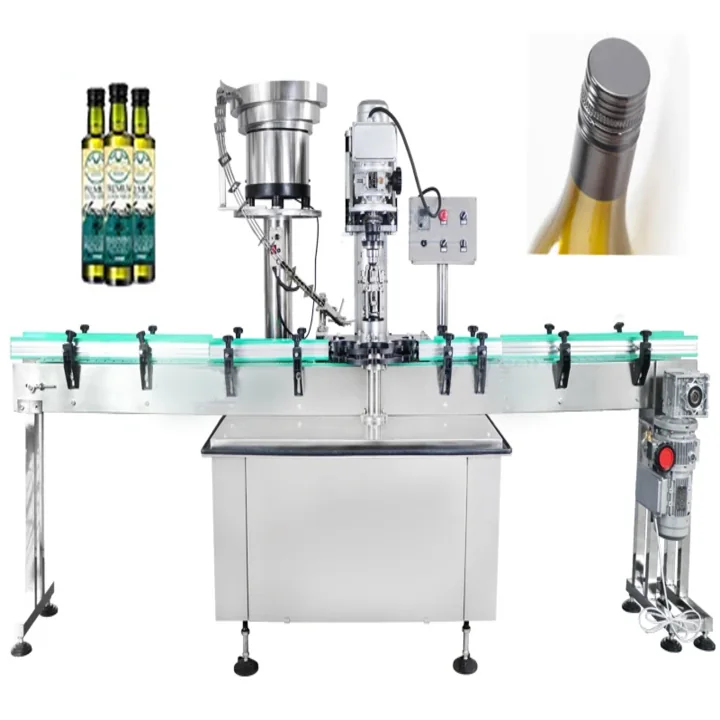
Related equipment
Aluminium roll-on pilfer-proof bottle sealing for glass bottles, oils, drinks and premium products.
Catalogue photograph; the required configuration is confirmed during quotation.
View related pageRelated equipment
Aluminium roll-on pilfer-proof bottle sealing for glass bottles, oils, drinks and premium products.
Catalogue photograph; the required configuration is confirmed during quotation.
View related page
Related equipment
Integrated bottle machinery covering filling, cap feeding, capping, labelling and conveyors.
Photograph of capping equipment on a bottle conveyor; the complete line scope is confirmed during quotation.
View related pageProject checklist
Accurate bottle, cap and line information reduces the risk of choosing a capper that looks suitable online but fails in production.
| Area | What to check |
|---|---|
| Closure design | ROPP cap, crimp cap, liner and tamper band. |
| Bottle material | Glass or rigid container with suitable neck finish. |
| Finish quality | Cap skirt, sidewall appearance and seal integrity. |
| Line layout | Bottle handling before and after sealing. |
Useful answers
These answers are designed to help production teams prepare a clearer enquiry before sample testing or quotation.
No. Many are ROPP, but some aluminium closures use different sealing or crimping methods.
It depends on the neck finish and closure design; samples are needed to confirm suitability.
Yes, especially on premium glass bottles where cap marks, skirt formation and alignment are visible.
Different bottle and cap sizes usually require setup changes or tooling.
Send bottle photos, cap samples, output target and line details so the right capper, cap feeder or complete bottle machinery route can be reviewed.
Provide the closure supplier reference and a drawing of both the cap and bottle neck. A photograph of an aluminium cap does not establish whether it is a roll-on, pre-threaded or another closure design. Ask the proposal to name the closing process and the tooling intended for that exact combination.
For decorated closures, include the appearance you intend to accept. Agree which surfaces will be inspected and retain approved reference samples from the trial. This makes discussions about visible marks more specific than a general request for a premium finish.
Do not assume it does. Submit both neck drawings and pack samples, and request a written statement of the shared settings, separate tooling and validation needed for each bottle.