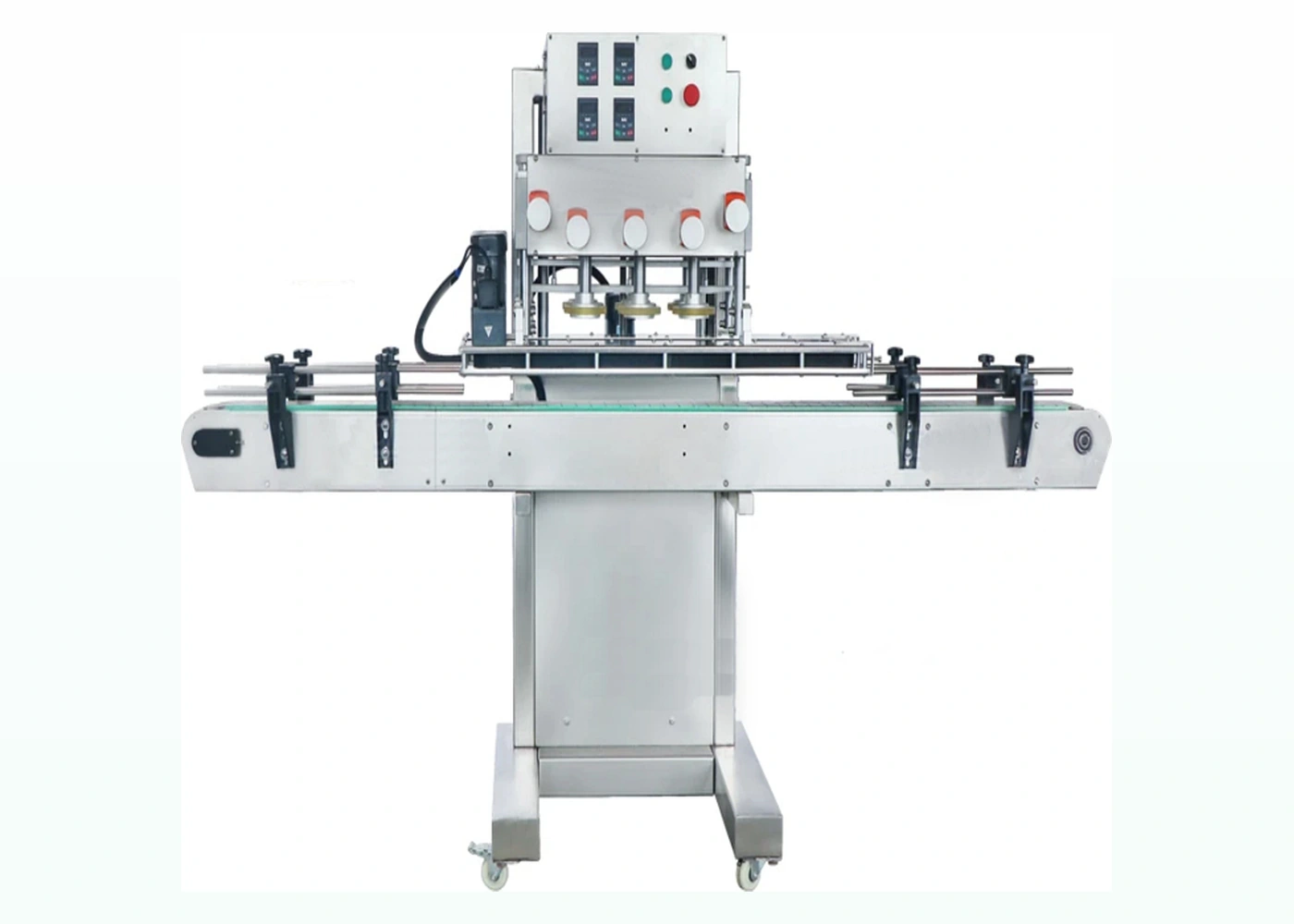
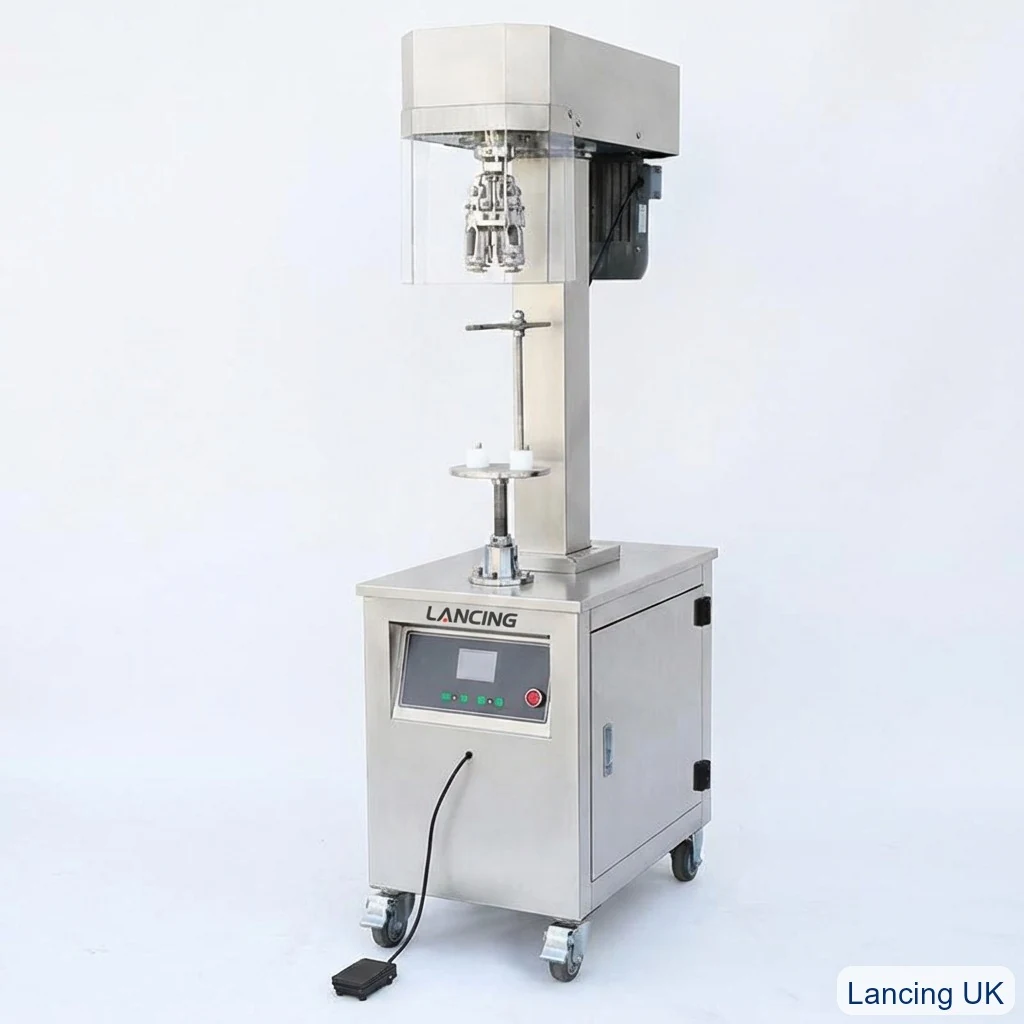
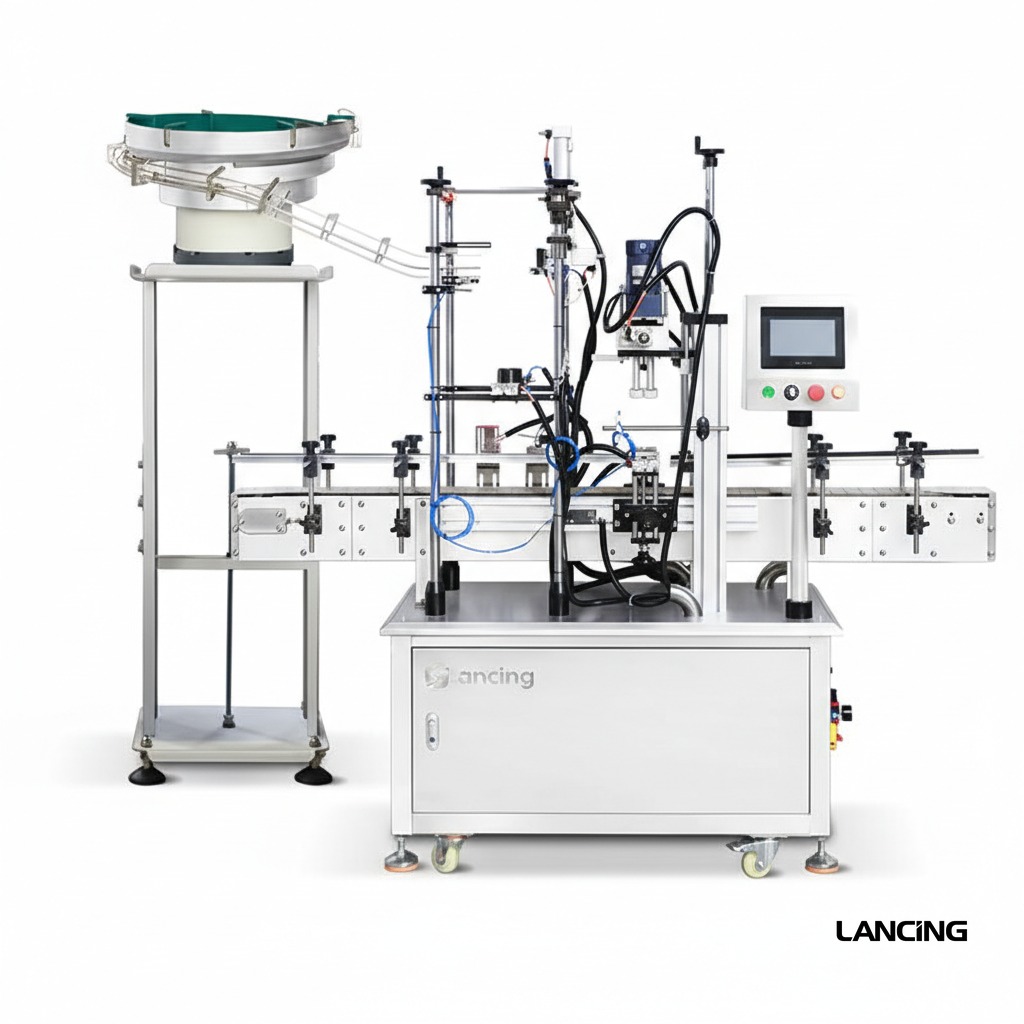
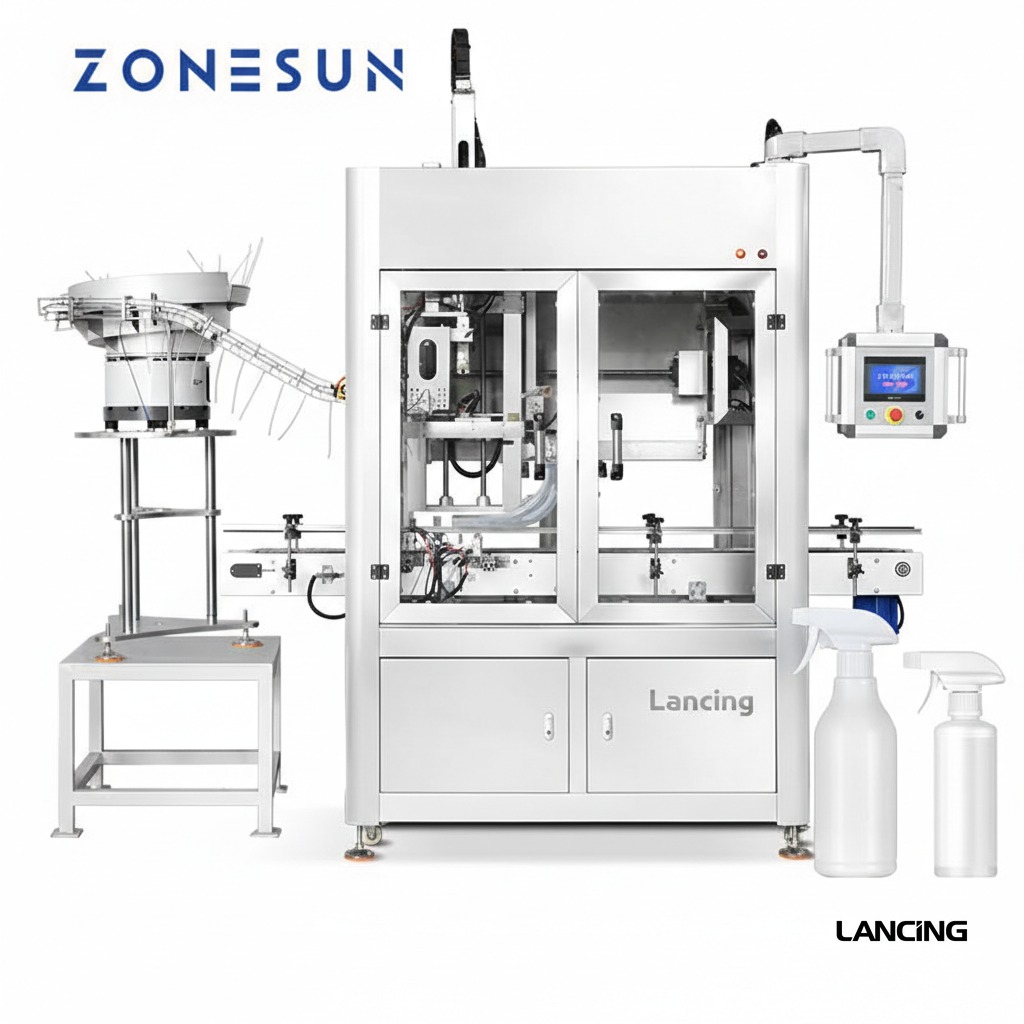
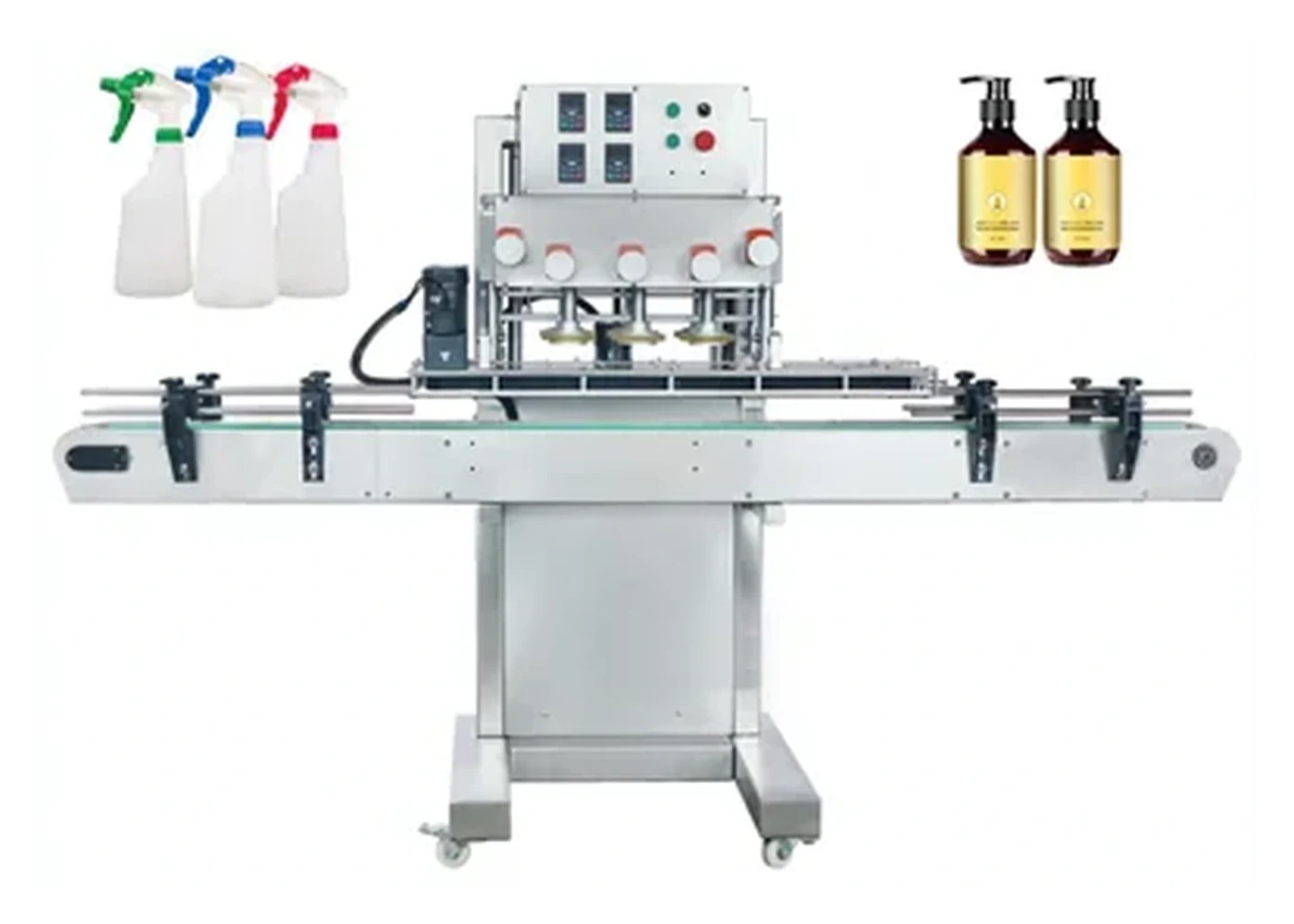
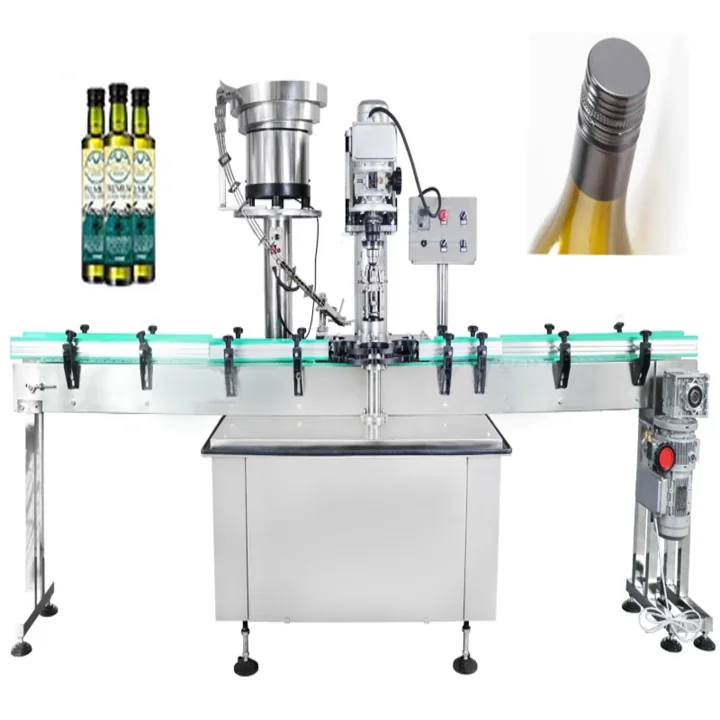
Bottle cappers and bottle machinery for UK production lines.
Choose a bottle capping machine around the complete closure process: cap feeding, placement, tightening or forming, bottle support and inspection. Compare automatic and semi-automatic routes using real bottle and closure samples, the required output and the equipment before and after the capper.
Confirm thread, torque, ROPP profile, pump tube or press fit.
03
Line speed
Match manual, semi-automatic or automatic output.
04
Cap feeding
Check orientation, sorting and presentation before specifying automation.
05
Integration
Plan conveyors, filling, labelling, coding and operator access.
Machinery focus
Bottle machinery built around the cap, container and output target.
A reliable bottle capping line is specified from the closure backwards: cap style, cap feeding, bottle stability, torque or seal requirement, fill product and production speed all affect the final machine choice.
Screw cappers
Threaded caps, flip-top caps, spray caps and standard closures that require repeatable torque.
ROPP cappers
Aluminium roll-on pilfer-proof closures for glass bottles, oils, spirits and beverage applications.
Pump and trigger cappers
Pump heads, lotion pumps, trigger sprayers and closures with tubes or awkward orientation.
Cap feeders and handling
Bowl feeders, elevators, sorting, placement systems and cap presentation into the capping head.
Filling and capping lines
Filling, capping, labelling, coding, conveyors, accumulation and production-room layout.
From manual capping to a complete automated packaging line.
Bottle Cappers UK is positioned for companies that need more than a catalogue machine. Project scope can include bottle filling and capping lines, cap elevators, conveyors, labelling, coding and production area planning.
Manual to semi-automatic
Upgrade from hand capping to controlled torque, cleaner operation and reduced operator strain.
Semi-automatic to automatic
Add cap feeding, conveyor handling and automatic tightening when output and repeatability need to improve.
Complete bottle lines
Build a coordinated line with filling, capping, labelling, coding, conveyors and accumulation planned together.
Specification answers
Bottle capping machine questions.
Common bottle capper questions are answered before the quote stage so the enquiry starts with better information.
What is the best bottle capper for my product?
Start with the cap type and bottle format. A screw capper is usually suited to threaded caps, a ROPP capper to aluminium pilfer-proof closures, and a pump or trigger capper to closures with tubes or difficult orientation.
Can Bottle Cappers UK help with more than the capper?
Yes. Support can cover bottle machinery as well as bottle cappers, including cap feeding, filling and capping lines, conveyors, labelling, coding and production line layout.
Do I need an automatic or semi-automatic capping machine?
Semi-automatic equipment can suit lower-volume or varied batch work. Automatic bottle capping machinery is usually chosen when output, consistency and reduced manual handling are the priority.
What information is needed for a quote?
Send bottle samples, caps, target speed, fill product, cap torque or seal requirement, available floor space, power and air supply details, and any existing conveyors or filling equipment.
Do bottle capping machines need cap feeders?
Automatic bottle capping machines usually need a reliable cap feeding or cap presentation method. Semi-automatic machines may still use manual cap placement where flexibility is more important than speed.
Can one bottle capper run screw caps, pumps and triggers?
Sometimes one base machine can be adapted, but screw caps, pumps and trigger sprayers often need different heads, guides, tube control or cap feeding arrangements.
What sectors use Bottle Cappers UK machinery?
Typical sectors include cosmetics, personal care, household chemicals, food and drink, oils, healthcare, technical products and contract packing.
Can a bottle capper be supplied as part of a complete bottle machinery line?
Yes. A project can include filling, cap feeding, capping, labelling, coding, conveyors and accumulation when the full production flow is reviewed together.
Ready to specify a bottle capper?
Send bottle and cap details, line speed target and photographs of the current production area. Lancing can advise on the most suitable bottle capping machine or complete line route.
Choose a bottle capping machine from the complete closure process, not the cap diameter alone.
A reliable capping project starts with the bottle, closure and production method as one system. Lancing uses the information below to distinguish a practical batch capper from an automatic machine with cap feeding, bottle control and line integration.
Information that changes the bottle capper recommendation.
Project evidence
Why it matters
What to provide
Closure
Thread form, skirt shape, liner, tamper feature and external geometry determine the tightening or forming method.
Production caps, supplier drawing, nominal dimensions and all closure variants.
Bottle
Height, width, neck finish, rigidity, filled weight and centre of gravity affect gripping, support and transfer.
Empty and filled samples, bottle drawing and the least stable format.
Quality requirement
“Cap fitted” is not a complete acceptance criterion. Torque, cap height, thread engagement, leakage and appearance may all matter.
Approved pack samples and the checks used by production or quality teams.
Output
Headline cycle speed can be different from sustained output once cap replenishment, operator tasks and downstream stops are included.
Required bottles per minute or hour, shift pattern, batch size and changeover frequency.
Line interface
Conveyor height, bottle spacing, accumulation, controls and upstream or downstream equipment affect the final scope.
Layout, photographs, available footprint, utilities and equipment sequence.
Technology ownership
Use this site for the overall bottle-capping decision, then follow the specialist route where the closure demands it.
Bottle Cappers UK is the parent selection resource for comparing automation level, bottle handling, cap feeding and complete line requirements. Detailed specialist information remains with the relevant Lancing closure site, preventing several pages from competing for the same search intent.
Questions to resolve before comparing bottle capping quotations.
What samples should be supplied for a bottle capping machine trial?
Supply production-intent bottles and closures, including the lightest, tallest, least stable or most difficult combinations. Filled samples may be needed where weight, product on the neck or container flexibility changes the capping result.
How should capping output be stated?
State the sustained required output, batch size and shift pattern rather than only a maximum cycle rate. Include cap replenishment, operator loading, changeovers and expected upstream or downstream stops.
Which torque figure should be used?
Use a closure specification or an approved packed sample where available. Application torque, removal torque and opening performance are related but are not interchangeable, so the required measurement method should be agreed before testing.
When is a cap feeder necessary?
A feeder is normally considered when manual cap placement limits output, orientation must be controlled or an automatic line needs continuous closure supply. The cap geometry and bulk behaviour must be tested, not assumed from diameter alone.
Can one capper run several bottle and cap formats?
Often yes, but the machine may need change parts, chucks, guides, bottle supports, feeder tooling or stored settings. Every required format should be listed before quotation so changeover scope is visible.
What should a useful capping trial record?
Record the exact bottle and cap batches, machine settings, sustained run duration, cap feed interruptions, rejects, cap height, torque or opening checks, leakage observations and any damage to bottles or closures.
Production acceptance window
Define what an acceptable capped bottle looks like before choosing the automation level.
A bottle capping machine should be selected against an agreed production window, not a single ideal sample. The useful starting point is a short record of the bottle and closure combinations that must run, the quality checks that matter and the normal interruptions that the equipment must recover from. This gives Lancing a clearer basis for comparing a semi-automatic capper, an automatic bottle capper and a complete capping line.
Evidence that defines the operating and acceptance window for a bottle capping project.
Decision area
What to define
How it affects the machine choice
Approved finished pack
Cap height, thread engagement, closure orientation, tamper feature, leakage checks, opening behaviour and visible condition.
Determines the capping method, tooling, bottle support and inspection needed to produce an acceptable bottle consistently.
Worst-case format
The tallest, lightest, softest, least stable or most difficult bottle and closure combination in the proposed range.
Can set the practical limit for conveyor handling, clamping, side grip, cap placement and sustained output.
Normal production rate
Accepted bottles per minute or hour, batch size, shift pattern, operator tasks and normal replenishment method.
Separates a realistic semi-automatic route from an automatic machine that needs continuous cap feeding and line control.
Recovery events
Low caps, gaps in bottle supply, downstream stops, incorrect cap presentation, short stops and restart after intervention.
Shows whether buffering, interlocks, reject handling or a different cap-feeding arrangement is required.
Format change
Every bottle and closure family, the required changeover method, cleaning steps and first-off approval checks.
Choose the capping route by the production work that must become controlled and repeatable.
Moving from hand capping to machinery is normally about removing a specific constraint: inconsistent tightening, operator effort, slow cap placement, unstable bottles or poor coordination with the rest of the line. Identifying that constraint prevents unnecessary automation while leaving a practical route for future growth.
Controlled tightening
Where the operator can continue to present bottles and caps, compare the semi-automatic bottle capping route against the required batch output, tooling and operator cycle.
Automatic closure supply
Where manual cap placement limits output, review cap feeding and closure handling together with the capper. A fast capping head cannot compensate for unreliable presentation.
Continuous bottle flow
Where filling, conveying and downstream machinery already run automatically, use the automatic capper guide to define bottle control, interlocks and restart behaviour.
A useful enquiry includes production-intent bottles and closures, the current process, the accepted finished pack, the required sustained output and a simple layout. These inputs allow Lancing to confirm which tests and change parts are needed before a final machine configuration is agreed.
Move from a machine shortlist to a bottle-capping system that can be tested against real production conditions.
A useful capping project defines more than cap diameter and a headline cycle rate. The bottle, closure, product, operator tasks, cap supply, conveyor interfaces and accepted finished pack all affect the machine route. The guides below organise that evidence without changing the existing selection path.
Questions buyers ask when a bottle capping project moves beyond a catalogue shortlist.
These answers connect the machine choice to the evidence needed for a defensible trial, quotation and production handover. Each answer points to the strongest page for the next engineering decision.
How do I know whether the closure or bottle is causing the capping problem?
Separate the pack from the machine by checking the same closure across representative bottle lots and the same bottle with representative closure lots. Look for changes in thread start, neck finish, liner contact, rigidity, friction and cap geometry before changing the machine setting. The tolerance guide explains how to build that comparison without assuming that nominal size means identical behaviour.
What makes a bottle capping answer reliable enough to use in a specification?
A reliable answer states the bottle, closure, product condition, machine configuration, measurement method and acceptance rule. It also identifies what was not represented in the test. A claim based on one ideal sample or a short dry run should not be treated as proof of production suitability. Use the trial guide to turn an answer into repeatable evidence.
Which page should I use when the same project includes filling, capping and labelling?
Use the bottle filling and capping line guide when the enquiry depends on machine interfaces, conveyors, accepted output and responsibility between stations. Individual machine pages remain useful for the closure method, but the integrated-line page should own questions about line balance, controls, buffering and the finished-pack result.
When should production samples be rechecked after a packaging component change?
Recheck samples whenever a bottle, closure, liner, pump, trigger or relevant supplier process changes in a way that could affect handling or sealing. A drawing comparison is useful, but it cannot prove feeder behaviour, thread engagement or bottle stability. The component-change guide sets out a proportionate validation sequence.
Turn the bottle capping decision into a measurable operating standard.
The strongest next step is to define how the selected machine will be judged after installation: accepted output, predictable start and restart, capable finished-pack quality, traceable component data and a structured response to recurring faults.
How will accepted output and downtime be measured?
Define the line boundary, planned production time, quality checks and event codes before comparing capacity. This separates capper losses from cap feeding, bottle flow and downstream restrictions.
How will finished-pack consistency be demonstrated?
Use a stable setup, suitable measurement method and time-ordered samples for the characteristics that matter to the closure, such as torque, cap position, leakage, orientation or tamper condition.
What happens to bottles during start-up, stops and restart?
Specify line clearance, machine states, the uncertain-bottle zone, first-off checks and who releases normal production after a fault or changeover.
Which bottle and cap data should support the quotation?
Provide current drawings and production samples for the bottle, closure, liner, pump or trigger so machine contact, tolerances, feeding and change parts can be reviewed together.
Move from machine family to a documented model shortlist.
The model library adds published reference ranges, capping methods, utilities and confirmation boundaries for six Lancing routes. Use it after comparing the broad technologies already covered above.
Resolve the packaging detail that changes the capping project
The right bottle capper depends on more than a cap diameter. A new closure feature, a hot-filled product or a change in labour availability can change which machine route is worth reviewing.
What should be checked before selecting a capper from its specification table?
First decide which task is changing: cap application, cap feeding, bottle restraint or the complete production sequence. Then check any closure feature that must survive handling, such as an attachment or a vent. Use the existing model ranges as a shortlist and keep the untested application conditions explicit.
What should a bottle cap tightening machine trial prove?
Use the intended bottle and closure combination and define acceptable cap application and removal results. Include variation in cap presentation, bottle grip and the production rate. Check for cross-threading, damaged closures and inconsistent seating, then agree how operators will set, check and record the capping process.
Build a bottle capping brief around the pack you need to release
A bottle capper enquiry is easier to assess when it describes the finished pack, not only a machine speed. Start with the closure families you actually use: a threaded screw cap, an aluminium closure requiring forming, a press-fit cap, or a pump or trigger with a dip tube. Keep those families separate in your sample list so that one successful trial is not assumed to cover every closure.
For each family, describe an acceptable finished bottle. Include the appearance of the cap, how the closure should open, any liner or tamper feature, and the checks your production team already uses. If you have not set acceptance limits, say so in the enquiry and request a review with the bottle and closure suppliers before treating a trial as approval.
Next describe the work around capping. Who replenishes closures, presents bottles, removes rejects and changes formats? Note whether the bottle arrives from a filler or is loaded by hand. An equipment comparison should show which of these tasks is included in each proposal and which remains with your team.
Use the machine and application pages to narrow the route, then ask for a sample-based review of the exact combination. Photographs are useful for the first conversation; labelled physical samples, drawings and a simple layout make the later proposal easier to compare. Keep optional future formats separate from the packs that must work on day one.
Current production
List the packs, shift pattern and recurring closure faults that make this project necessary.
Acceptance evidence
Ask for results against named sample references, including rejects and operator interventions.
Project boundaries
Separate cap feeding, placement, tightening or forming, inspection and downstream handling in the quotation.
Can I compare cappers before I know my final output?
Yes. Begin with the closure process and pack range, then provide an estimated production window. Ask the supplier to identify which decisions remain provisional until output and samples are confirmed.