Dip-tube handling
Long or flexible tubes need controlled presentation so they enter the bottle without bending, catching or slowing the line.
Pump and trigger cappers
Bottle cappers for pumps, lotion pumps, trigger sprayers and spray closures where tubes, orientation and bottle stability make the application more complex than a standard cap.
Specification focus
Use this page to narrow the specification around this bottle machinery family before requesting a quote.
Long or flexible tubes need controlled presentation so they enter the bottle without bending, catching or slowing the line.
Trigger heads and pumps are shaped parts; feeding and presentation are often the most important parts of the solution.
Common projects include cosmetics, household sprays, sanitiser, cleaning chemicals, healthcare products and technical liquids.
Relevant equipment
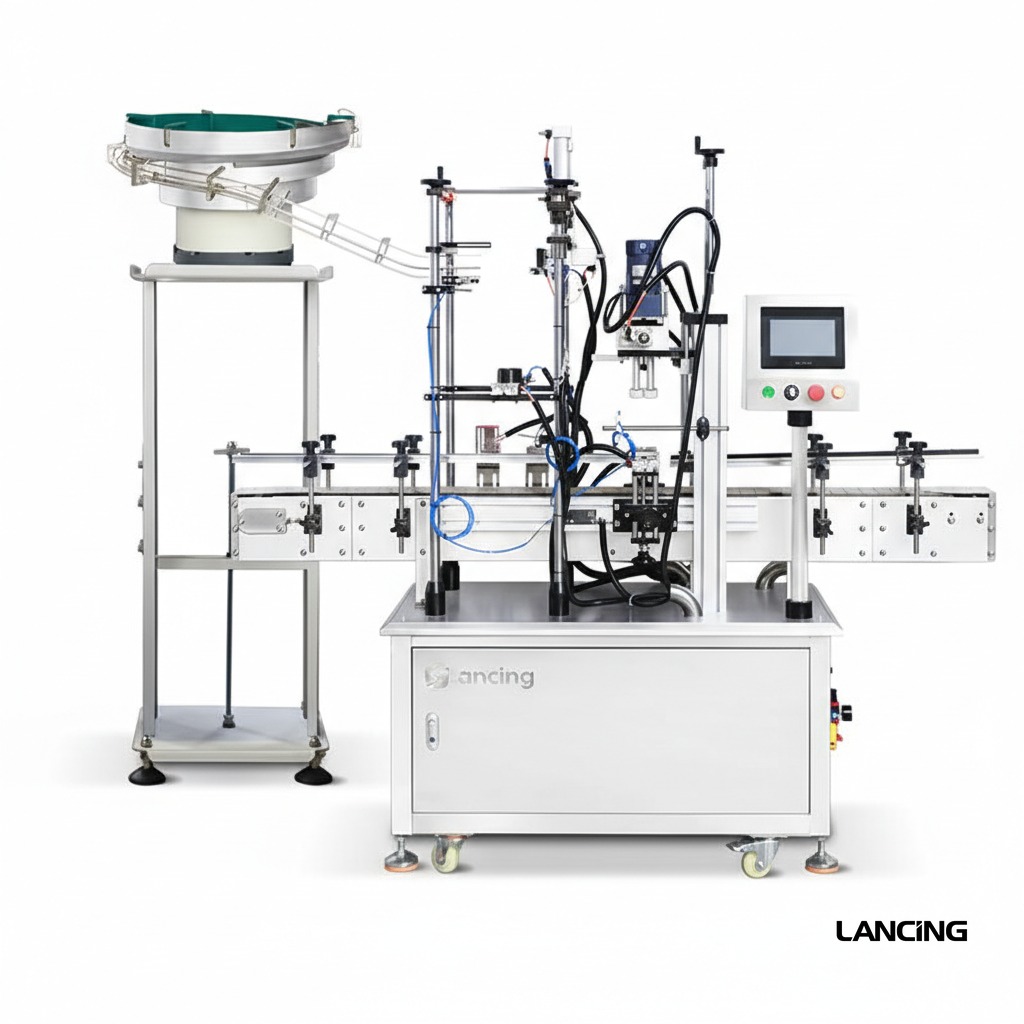
Pump cappers
Cap placement and tightening for pump closures where dip-tube handling, orientation and bottle stability matter.
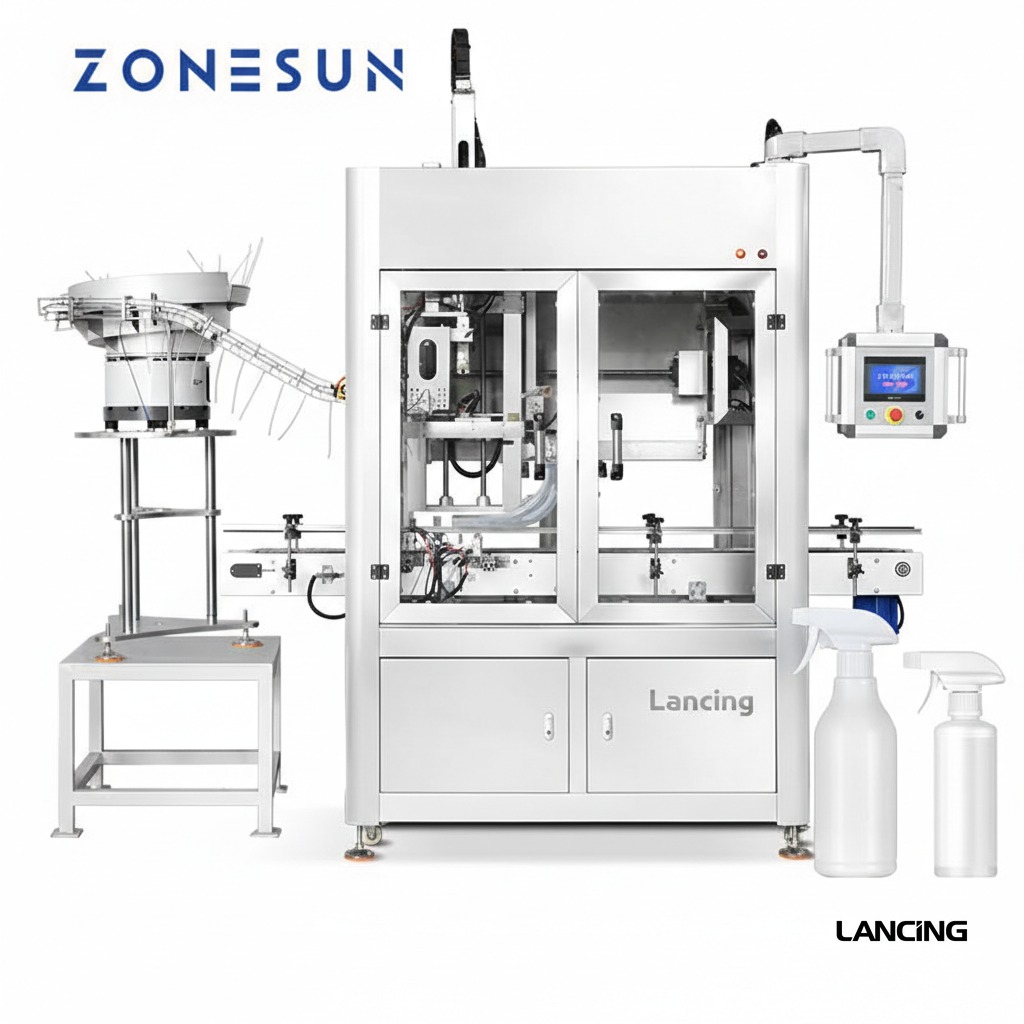
Trigger cappers
Bottle capper for trigger sprayers and pump heads where cap geometry, tube control and threading need careful handling.
Before you ask for a quote
For an accurate recommendation, supply bottle and closure samples or photographs, target output, batch sizes, fill product, bottle dimensions, cap dimensions and notes on any existing line equipment.
| Closure / cap type | Typical machine route | Specification checks |
|---|---|---|
| Threaded plastic screw cap | Screw capper, chuck capper, belt or spindle capper | Torque repeatability, cap height, bottle grip, thread start, changeover time |
| Aluminium ROPP closure | Semi-automatic, automatic or multi-head ROPP capper | Bottle neck finish, skirt length, tamper band, glass stability, roller tooling |
| Pump or lotion pump | Pump bottle capping machine with tube control | Dip-tube length, orientation, cap presentation, bottle stability, tightening torque |
| Trigger sprayer | Trigger sprayer bottle capping machine | Head orientation, tube handling, product sector, container neck and bottle shape |
| Push-on or snap cap | Press capping machine with cap feeder | Vertical force, closure fit, bottle support, cap nesting and feeder orientation |
FAQs
Pumps and triggers are larger, shaped closures and often include long dip tubes, so feeding and placement are more complex.
Yes, but the machine should be specified around the trigger head, tube length, bottle neck, cap thread and required orientation.
Send bottle and cap details, line speed target and photographs of the current production area. Lancing can advise on the most suitable bottle capping machine or complete line route.
Asymmetric closure handling
A pump or trigger may use a standard threaded bottle finish, but its external shape, nozzle direction and tube create handling tasks that an ordinary screw cap does not have. The closure must be separated, presented, inserted without tube damage and then tightened while the bottle remains stable.
| Area | Why it matters | Trial evidence |
|---|---|---|
| Closure orientation | The trigger, nozzle, actuator or locking feature may need a defined direction at placement or after tightening. | Correct presentation rate, final orientation tolerance and reject or recirculation behaviour. |
| Dip tube | Length, stiffness, curvature, cut end and tolerance affect separation, insertion and the risk of tangling or kinking. | Inspection for bent, stretched, trapped or damaged tubes after a representative feed and placement run. |
| Bottle stability | Tall, light or flexible containers can rotate, tip or collapse while a large asymmetric closure is handled. | Stable transfer, support and tightening with empty and filled worst-case bottles. |
| Thread start and torque | The closure must enter squarely before tightening; orientation control can interact with final torque. | Cap height, thread engagement, orientation, torque or opening check and leakage where relevant. |
| Bulk feeding | Triggers and tubes can nest, bridge or tangle in hoppers and bowls. | Normal replenishment, stop/restart, recirculation and sustained-output evidence using production closures. |
Trigger feeder reference
| Published item | Reference value | Confirmation required |
|---|---|---|
| Suitable cap size | Approx. Ø15–35 mm | Confirm the complete trigger body, nozzle, thread and centre of gravity, not diameter alone. |
| Suitable bottle height | Approx. 10–280 mm | Confirm bottle width, rigidity, filled weight, guide contact and neck position. |
| Working capacity | 20–25 bottles/min | Validate sustained capacity with the proposed bowl, tube behaviour, placement route and capper interface. |
| Handling route | Vibratory bowl, pneumatic placement and dip-tube assistance | Test nesting, tube tangling, incorrect orientation, recirculation and restart recovery. |
The source and further model detail are on the Lancing Trigger Cappers product page. Pump-specific specialist intent is owned by Lancing Pump Capping Machines.
List the feeder bowl, track, escapement, gripper or placement head, tube guide, bottle fixture, capping chuck and orientation sensor as separate changeover items. A format is not fully changeable until each required part and setting is identified.
Pump and trigger FAQ
The trigger body is asymmetric and the dip tube can tangle, bend or prevent stable bulk presentation. A feeder must control both closure orientation and tube behaviour before placement.
Sometimes the final tightening method is similar, but the closure may still need dedicated presentation, insertion, bottle support and orientation control. Compatibility must be demonstrated with the complete closure.
Provide nominal length and tolerance, diameter, material, stiffness, natural curvature, cut-end style and every tube variant. Production samples are important because bulk behaviour is difficult to predict from dimensions.
It may be established before placement, by controlled tightening, by an orientation station or by a combination. The acceptable final direction and measurement method should be stated before the machine is configured.
Include normal hopper refill, a short line stop, a nearly empty feeder, an incorrect closure where safe to test, and restart to the required rate. Record jams, recirculation, tube damage and incorrectly presented caps.
Use this page for the parent comparison. Follow Lancing Trigger Cappers or Lancing Pump Capping Machines for detailed specialist closure and model intent rather than duplicating it here.
Pump and trigger trial plan
Pumps and triggers add a long, flexible component to the capping process. Tube length, curvature, stiffness, nozzle orientation and the closure centre of gravity can affect feeding and insertion even when the thread and nominal cap diameter appear suitable.
| Trial condition | What to observe | Decision evidence |
|---|---|---|
| Loose closure handling | Nesting, tube tangling, damage, orientation stability and the effect of normal bulk loading. | Accepted and rejected closure states plus the agreed loading method. |
| Tube approach | Entry angle, contact with the bottle neck, tube curl and whether the tube reaches the container without buckling or riding outside. | Slow-cycle video or observation for every agreed tube and bottle combination. |
| Placement | Closure position before tightening, bottle support, gripper or guide contact and recovery from an incomplete placement. | Defined sensor or operator check and a known response to a failed placement. |
| Tightening | Thread engagement, nozzle orientation where relevant, cap position and the chosen functional or torque approval method. | Recorded settings and approved finished packs for each format. |
| Normal disturbance | Low closure level, replenishment, stop/restart, recirculation and a representative misfeed. | Recovery without a hidden manual action that is absent from the production method. |
Use the compatibility guide to define the format set and the cap-feeder acceptance test to prove sustained closure supply. Include the final tube and closure behaviour in the machine trial record.
Pump and trigger questions
Pump and trigger capping combines tube handling, closure placement, thread start and final tightening. Each stage can be affected by component geometry that is not visible in the nominal neck size.
A curved or memory-set tube may approach the bottle mouth off-centre, catch a shoulder or resist the intended guide path. Tube length, stiffness, cut end, packaging method and storage can all influence behaviour. Trial production-intent pumps or triggers in the filled-bottle condition when bottle stability or product splash could also affect entry.
Final orientation can move because of thread lead, component spring-back, top load, capper release and residual torque in the closure. Define whether orientation is a cosmetic preference or an acceptance requirement, then measure it after the complete capping cycle rather than while the head still holds the component.
Record the supplier and batch reference, packaging condition, observed bulk behaviour, feeder level, recirculation, orientation failures, adjustments and resulting cap quality. Keep retained examples where appropriate. The evidence should show whether the variation follows the component batch, the feeder setup or another production condition.
Compare the closure body, thread, nozzle, centre of gravity, tube material, length and curvature, then repeat bulk feeding, placement, tightening, orientation and recovery checks. A drawing match alone cannot prove tube handling. Follow the staged process in the supplier-change guide.
Dispensing-closure investigation
Pump and trigger faults can occur before the tightening step. A useful investigation records the component geometry and batch, tube condition, feeder or manual presentation, bottle opening, alignment, capping station and final orientation as separate evidence branches.
Review body diameter and profile, thread or crimp feature, head orientation, dip-tube length and curvature, bottle opening, tolerances and decoration contact zones.
Retain failed components, record the transfer stage, compare component lots under the same setup and determine whether the fault follows the closure, bottle, feeder, station or line condition.
Repeat the affected feed, tube-entry, placement, capping, orientation and functional checks when supplier, body, tube, cap, bottle opening or relevant drawing revision changes.
Drawing review for pumps and triggers Fault investigation method Validate component changes
Trigger-feeding model evidence
The LU-XG446S page records the current published screening envelope and the refill, recovery and placement evidence needed before treating the feeder as production ready.
Vibratory bowl, trigger orientation, dip-tube assistance and placement route.
Test low-level, refill, recirculation, stop and restart conditions.
Control component condition before feeder and placement trials.
Capping decisions and practical evidence
A pump or trigger project may need an improvement in dip-tube placement rather than a different capper. Observe the point where operator effort or rejects actually occur.
Base the sequence on the observed restriction. A feeder must deliver the head and tube in a condition the capper can use, while the capper must hold and tighten the closure without losing the required orientation. Cost both parts of the task and identify which existing equipment can be retained.