Trigger sprayers
Sprayers with dip tubes and head orientation need specialist capping and feeding checks.
Chemical products
Chemical bottle capping projects often involve trigger sprayers, screw caps, heavier containers, product compatibility and lines that need reliable operator access.
Specification focus
Bottle cappers for chemicals should be specified around cap type, container stability, product cleanliness, operator handling and any existing filling or labelling equipment.
Sprayers with dip tubes and head orientation need specialist capping and feeding checks.
Heavier or shaped bottles may need positive grip, side belts or guides during torque application.
Operator access, guarding, cleaning routines and product handling should be reviewed during layout planning.
Relevant equipment
These machine families are commonly reviewed when specifying chemical bottle capping machines for robust production environments.
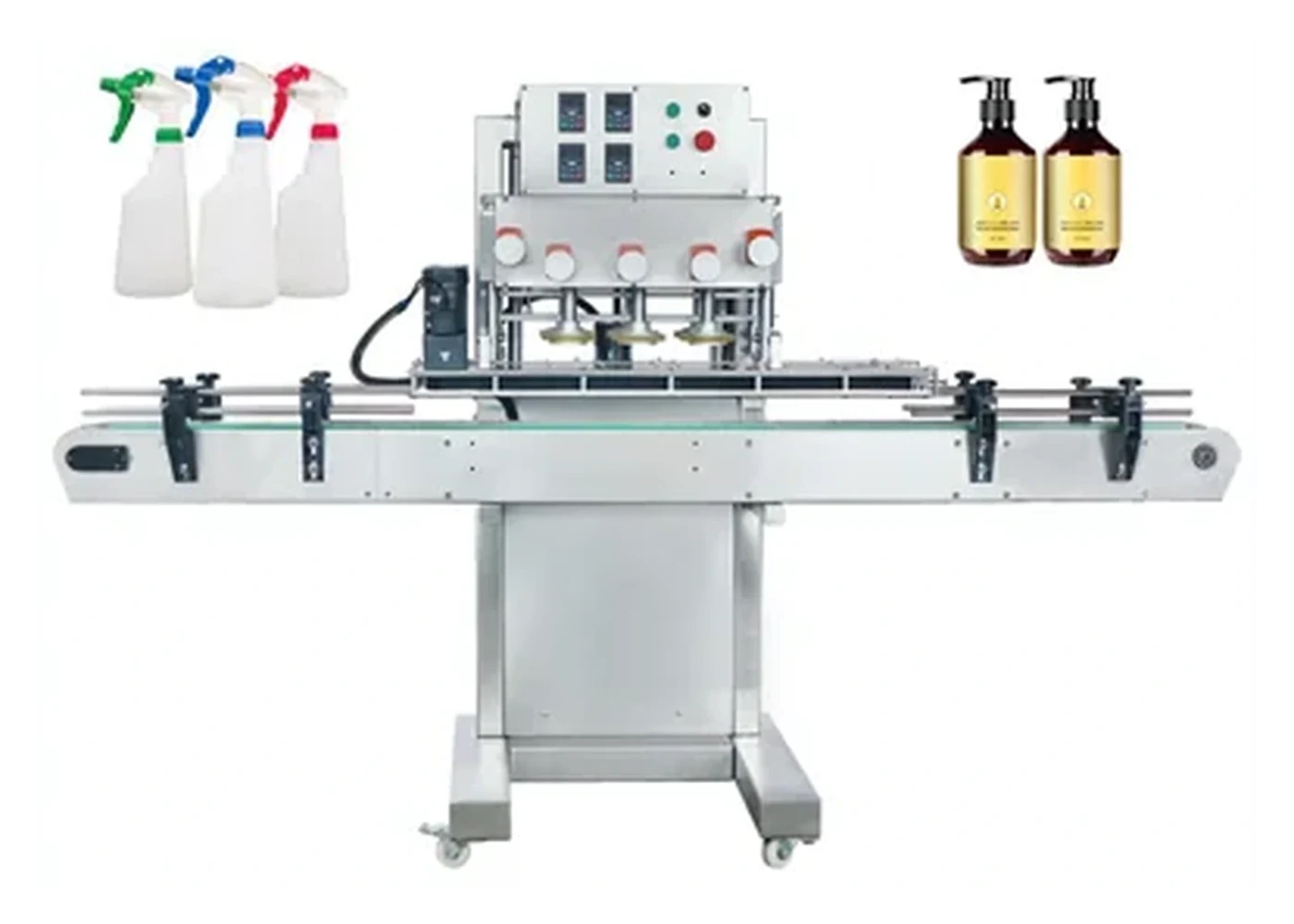
Automatic cappers
Inline cap tightening and cap feeding for higher-volume production.
Catalogue photograph; the required configuration is confirmed during quotation.
More about this machine familyScrew cappers
Torque-controlled tightening for threaded plastic and metal closures.
Catalogue photograph; the required configuration is confirmed during quotation.
More about this machine family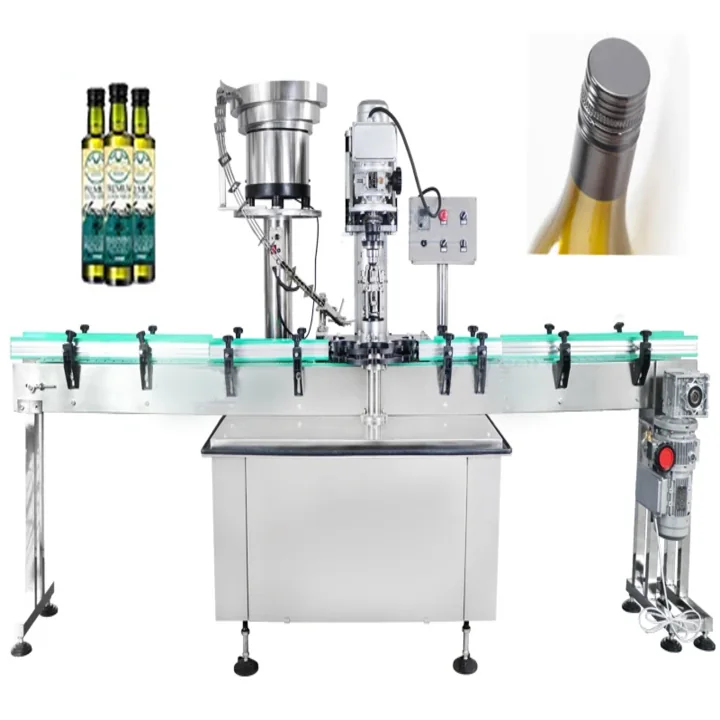
ROPP cappers
Roll-on pilfer-proof sealing for aluminium closures and glass bottles.
Catalogue photograph; the required configuration is confirmed during quotation.
More about this machine familyBuying checks
Accurate bottle machinery selection depends on the closure, bottle neck, bottle shape, fill product, speed target and the amount of manual handling that can remain in the process.
| Check | Why it matters | Details to send |
|---|---|---|
| Product type | Viscosity, residue and cleaning needs can affect the line design. | Product description and filling method. |
| Closure type | Trigger sprayers, screw caps and child-resistant closures need different handling. | Cap samples and required orientation. |
| Container stability | Large or shaped chemical bottles may need stronger bottle control. | Bottle dimensions, material and filled weight. |
| Integration | Filling, capping, labelling and coding should be planned for safe operation. | Existing line details and available floor space. |
More bottle capper pages
Use these crawlable pages to narrow the bottle capping machine route before sending samples or a project enquiry.
Inline cappers for higher output lines with cap feeding, conveyor control and repeatable tightening.
View pageBench and floor standing cappers for batch work, sampling rooms and controlled manual loading.
View pageChuck-head tightening for threaded caps where grip, cap profile and torque consistency matter.
View pageMachines for tightening screw caps, rework, batch production and improving closure repeatability.
View pageBottle cappers specified around torque range, cap material, thread engagement and bottle stability.
View pageCappers for ROPP, tamper bands, pilfer-proof closures and controlled seal presentation.
View pageCappers for lotion pumps, sprays, trigger closures, flip tops and personal care containers.
View pageCapping machinery for oils, sauces, drinks, glass bottles, plastic bottles and closures.
View pageHealthcare and technical bottle capping with repeatability, hygiene and line integration in mind.
View pageContinuous bottle cappers for conveyors, cap feeders, automatic tightening and integrated production flow.
View pageFAQs
Yes, trigger sprayers can be handled, but tube control and head orientation must be reviewed.
Often it can, but guides, grippers, heads and settings may need change parts.
Send product type, bottle and cap samples, target output, filled weight and any safety or cleaning requirements.
It can be reviewed, but conveyor control, bottle spacing and production-room layout need to be checked.
Send bottle and cap details, line speed target and photographs of the current production area. Lancing can advise on the most suitable bottle capping machine, cap feeder or complete line route.
Capping decisions and practical evidence
A cap with a pressure-equalising function needs different evidence from a conventional closure, even where both bottles use the same nominal screw thread.
The product and packaging specialists should determine that from the formulation and complete packaging system. Machine selection then needs the approved closure, application limits and handling restrictions. Do not make a gas path by leaving a standard cap loose or infer chemical compatibility from bottle material alone.