Tamper-evident aluminium caps
ROPP capping forms the aluminium closure around the bottle finish using rollers, creating a secure closure and pilfer-proof band.
ROPP cappers
Semi-automatic, automatic and multi-head ROPP cappers for roll-on pilfer-proof aluminium caps used on glass bottle packaging lines.
Specification focus
Use this page to narrow the specification around this bottle machinery family before requesting a quote.
ROPP capping forms the aluminium closure around the bottle finish using rollers, creating a secure closure and pilfer-proof band.
Common uses include spirits, wines, oils, drinks and premium glass packaging where appearance and seal quality matter.
Cap dimensions, skirt length, bottle neck finish and roller tooling must be confirmed together before final specification.
Relevant equipment
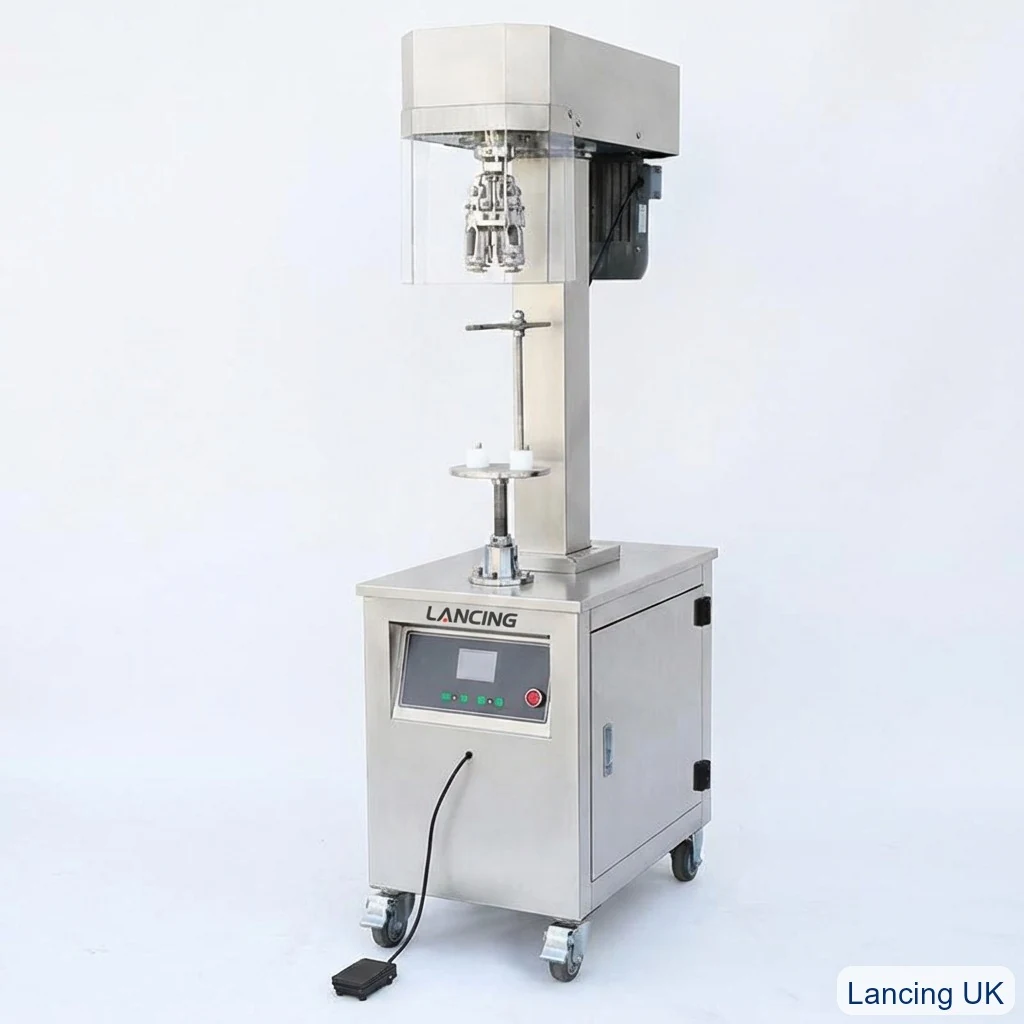
ROPP cappers
Operator-fed roll-on pilfer-proof capping for aluminium closures on glass bottles and short production batches.
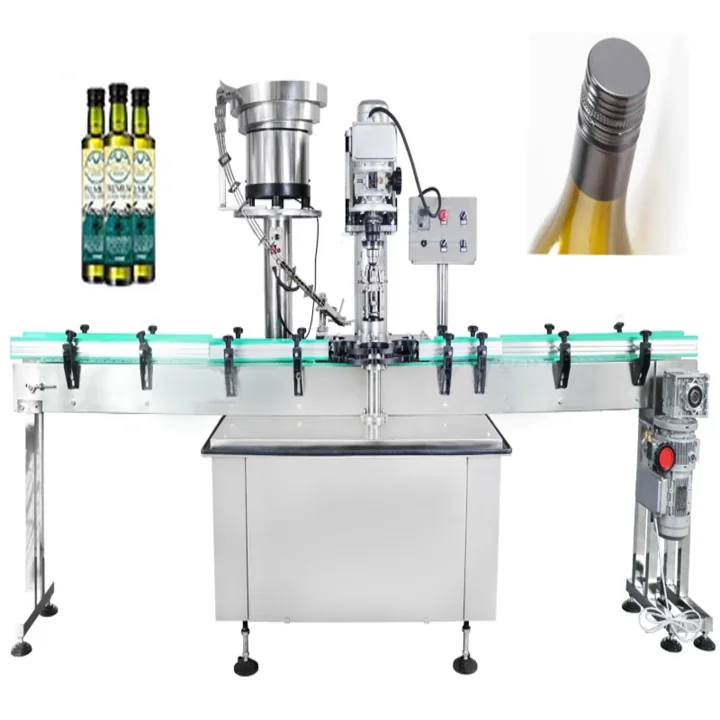
ROPP cappers
Automatic aluminium cap rolling for production lines requiring pilfer-proof sealing and conveyor integration.
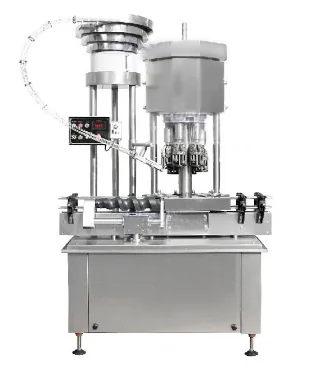
ROPP cappers
Multi-head ROPP solution for higher line speeds and consistent aluminium closure forming.
Before you ask for a quote
For an accurate recommendation, supply bottle and closure samples or photographs, target output, batch sizes, fill product, bottle dimensions, cap dimensions and notes on any existing line equipment.
| Closure / cap type | Typical machine route | Specification checks |
|---|---|---|
| Threaded plastic screw cap | Screw capper, chuck capper, belt or spindle capper | Torque repeatability, cap height, bottle grip, thread start, changeover time |
| Aluminium ROPP closure | Semi-automatic, automatic or multi-head ROPP capper | Bottle neck finish, skirt length, tamper band, glass stability, roller tooling |
| Pump or lotion pump | Pump bottle capping machine with tube control | Dip-tube length, orientation, cap presentation, bottle stability, tightening torque |
| Trigger sprayer | Trigger sprayer bottle capping machine | Head orientation, tube handling, product sector, container neck and bottle shape |
| Push-on or snap cap | Press capping machine with cap feeder | Vertical force, closure fit, bottle support, cap nesting and feeder orientation |
FAQs
ROPP stands for roll-on pilfer-proof. The cap is rolled onto the bottle neck to form the thread and tamper-evident band.
Semi-automatic ROPP cappers suit smaller batches and operator-fed production. Automatic ROPP cappers are used when output and line integration are needed.
Send bottle and cap details, line speed target and photographs of the current production area. Lancing can advise on the most suitable bottle capping machine or complete line route.
ROPP closure formation
Roll-on pilfer-proof capping is different from tightening a pre-threaded cap. The head applies top pressure to establish the seal, thread rollers form the aluminium skirt into the bottle thread and lower rollers form the tamper-evident band beneath the neck bead.
| Stage | Engineering purpose | Checks after capping |
|---|---|---|
| Cap placement | Present the aluminium shell square to the bottle finish without damaging the liner or decoration. | Cap is centred, at the correct height and free from feed or placement damage. |
| Top pressure | Compress the liner against the sealing surface before the skirt is formed. | Seal contact, cap height, bottle support, leakage and no container damage. |
| Thread rolling | Form the cap skirt into the bottle’s thread profile. | Clear, even thread definition and consistent opening and re-closing behaviour. |
| Pilfer-band forming | Tuck the lower band under the neck bead while preserving the designed bridges. | Band location, bridge condition, tamper evidence and no excessive deformation. |
| Finished-pack test | Confirm the combined bottle, cap, liner and machine setup. | Visual finish, leakage, opening torque or force, reseal feel and absence of cap or bottle damage. |
Verified reference routes
| Machine route | Published range | Published output | Trial focus |
|---|---|---|---|
| Semi-automatic ROPP capper | 20–50 mm cap diameter; 60–350 mm bottle height. | Typical 25–30 bottles/min. | Operator cap placement, bottle support, roller setup, opening checks and format change. |
| LU-XG440C8 eight-head ROPP capper | 30–90 mm bottle diameter; 22–38 mm bottle mouth; 100–330 mm height. | 7,500 pieces/hour reference capacity. | All-head comparison, cap feeding, rotary transfer, sustained line rate and reject evidence. |
The current first-party range and detailed closure guidance are maintained by Lancing ROPP. Use that specialist site for model-level ROPP intent and this page for the broader bottle-capping comparison.
Confirm cap diameter, height, liner, aluminium specification, perforations, bridge design, decoration and tolerances.
Confirm neck thread, sealing surface, retaining bead, dimensional tolerance and rigidity under top load.
Identify capping head or roller tooling, pressure block, bottle support, star wheels, guides and feeder parts for each format.
Record cap height, thread definition, band position, bridge condition, opening result, leakage and head-by-head results where applicable.
ROPP FAQ
A ROPP closure is normally formed onto the bottle rather than supplied with a finished thread. The machine must control top pressure, thread rolling and pilfer-band forming against a compatible bottle finish.
Possible causes include poor liner contact, contamination on the sealing surface, an incompatible cap or bottle finish, insufficient or excessive top pressure, cap placement variation and damaged packaging components.
Printed or lacquered caps can reveal scuffing, marking or deformation that plain development caps do not show. The final cap finish should be tested through feeding, placement and forming.
Track samples by head or station so one worn or incorrectly set head can be identified. Compare cap height, band formation, opening results and visual finish across all heads during a representative run.
It may, but different caps and bottles can require head tooling, rollers, pressure blocks, bottle supports, star wheels, guides, feeder parts and settings. Every required format must be reviewed.
Provide production-intent caps and bottles, supplier drawings, liners or inserts, decorated caps where used, filled condition, target output, all formats and the agreed leak, opening and appearance checks.
ROPP acceptance evidence
ROPP application forms the aluminium closure around the bottle finish. The approval method should therefore cover more than a visual check of whether the cap is present. The bottle and closure supplier information, actual samples and agreed opening or seal checks should define the acceptance window.
Check seating, top condition and any evidence of excessive or insufficient top pressure. Retain an approved example for comparison during setup and changeover.
Review whether the rollers form the thread consistently around the intended finish without damaging the cap, bottle or liner.
Inspect the tamper-evident feature, bridge condition and release behaviour using the pack owner's agreed method rather than an assumed generic criterion.
Define any leak, opening, retention or functional checks that apply to the finished product and record the conditions under which they are performed.
Build the sample matrix with the compatibility guide. Include all agreed heads, rollers and change parts in the FAT and SAT plan, then use the accepted-output guide to confirm the sustained result rather than relying on a single correctly formed cap.
ROPP process questions
ROPP quality is formed by the cap, bottle finish, liner, top pressure and roller arrangement acting together. The finished closure must therefore be checked as a formed package, not only as a cap that remains on the bottle.
Variation in the sealing land, thread profile, retaining bead, neck rigidity and vertical position can change roller contact, band formation and sealing. Use supplier drawings where available and trial representative production lots. The tolerance guide provides a method for organising the pack evidence.
The approved sample should show the required cap height, thread definition, pilfer-band position and bridge condition, visible finish, opening behaviour and seal result where applicable. The method should state when and how each check is performed so a later sample can be compared on the same basis.
ROPP tooling position and pressure are format-dependent. A repeatable record links the bottle and cap identity to the fitted head or tooling, relevant positions, first-off approval and any approved visual standard. The settings documentation guide shows how to keep mechanical references and quality evidence together.
Use the intended decorated closure whenever printing, coating, embossing or cosmetic finish could be marked by handling or forming. Plain shells may be useful during early mechanical work, but they cannot prove the appearance of the production closure. Include accepted marking limits in the final trial and acceptance record.
ROPP pack and transition control
ROPP performance depends on the represented bottle finish and closure as well as pressure, roller profile, placement, bottle support and finished-pack testing. Start-up and restart procedures should prevent uncertain formed closures from being mixed with accepted output.
Review the bottle finish, sealing land, closure shell, liner or insert, pilfer band and relevant tolerances. Use current revisions and production samples because physical material and decoration affect forming and handling.
Confirm cap presentation, bottle location, pressure-pad and roller setup, finished cap appearance, opening or leak method and the treatment of bottles already in the forming zone.
Use time-ordered samples, identify head or station where applicable and include visual, functional and opening checks agreed for the actual closure system rather than relying on one gross cycle count.
Review component drawings Start-up and line clearance Process capability and sampling
Published ROPP model routes
The two model pages make the volume, handling and acceptance differences explicit while retaining the bottle, cap shell and neck finish as one trialled format.
Batch route with operator bottle and cap placement.
Automatic rotary route requiring cap supply, transfer and head-by-head acceptance evidence.
Check thread, sealing land, pilfer feature and tolerance evidence before testing.
Capping decisions and practical evidence
A ROPP cap is formed on the bottle. A satisfactory opening result should be considered alongside thread formation, tamper-band condition and the agreed seal checks.
No. Define which part of the opening sequence is measured and inspect the formed closure using the approved pack criteria. Keep the bottle and cap lot, roller setup and test condition traceable. A changed instrument or sample age can make results differ without identifying which part of the forming process caused the difference.