Closing force
The machine needs enough force to seat the cap without crushing or distorting the bottle.
Push-on closures
Press caps need controlled downward force, accurate alignment and bottle support rather than screw torque.
Specification focus
The cap design, neck bead, closing force and bottle material decide whether a simple press station or more controlled machine is needed.
The machine needs enough force to seat the cap without crushing or distorting the bottle.
Caps must be presented squarely to avoid partial seating or damaged necks.
Press-fit closures often need a clear check that the cap is fully seated after closing.
Related equipment
These pages help compare the main bottle capping machinery routes before requesting a detailed quotation.
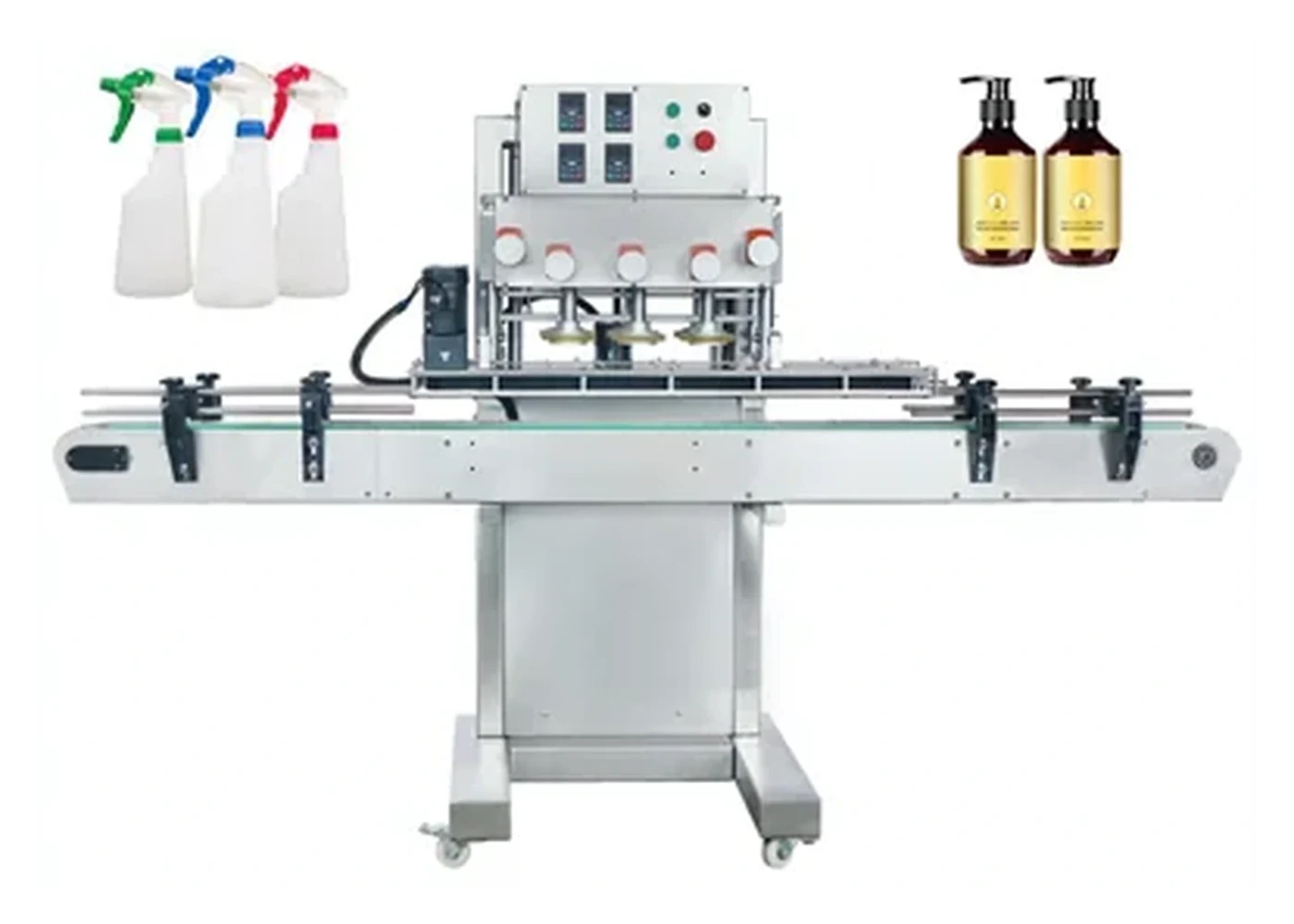
Related equipment
Torque-controlled tightening for threaded caps, flip tops, spray closures and standard screw caps.
Catalogue photograph; the required configuration is confirmed during quotation.
View related page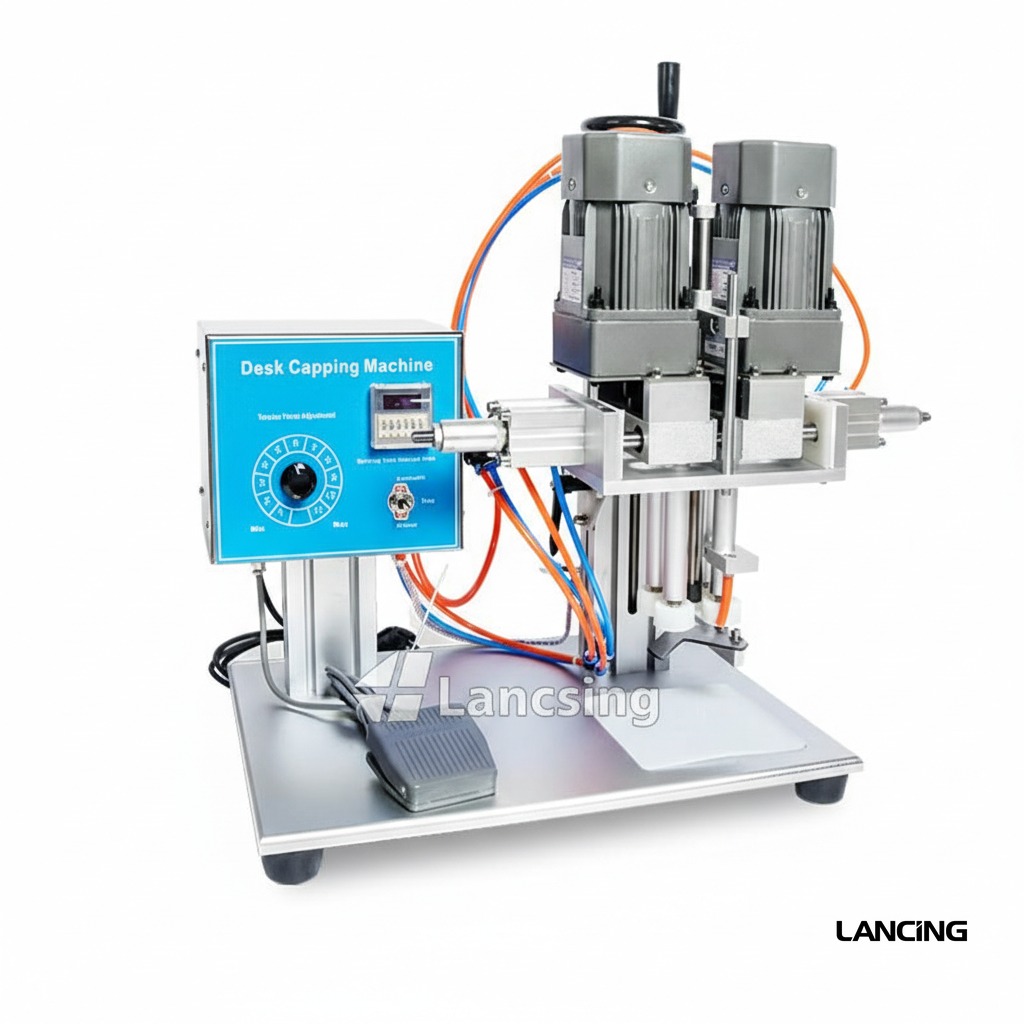
Related equipment
Bench and floor-standing capping machines for batch production, trials and lower-volume lines.
Catalogue photograph; the required configuration is confirmed during quotation.
View related pageRelated equipment
Inline bottle cappers with conveyor handling, cap presentation and repeatable closure control.
Catalogue photograph; the required configuration is confirmed during quotation.
View related pageProject checklist
Accurate bottle, cap and line information reduces the risk of choosing a capper that looks suitable online but fails in production.
| Area | What to check |
|---|---|
| Cap type | Snap-on, push-on, plug cap or press-fit closure. |
| Neck finish | Bead or sealing feature that the cap must engage with. |
| Force | Closing pressure and bottle resistance. |
| Quality check | Visual or mechanical confirmation that the cap is seated. |
Useful answers
These answers are designed to help production teams prepare a clearer enquiry before sample testing or quotation.
No. Press caps require downward seating force, while screw caps need rotational torque.
Yes, depending on cap feeding, bottle control and the force needed to seat the cap.
Misalignment, insufficient seating force and bottle distortion are common specification issues.
Manual placement may suit low volume; automatic lines need reliable cap feeding or presentation.
Send bottle photos, cap samples, output target and line details so the right capper, cap feeder or complete bottle machinery route can be reviewed.
For a press-fit closure, bring an approved assembled pack and separate unassembled samples. Ask the closure supplier to define the intended seated position and any inspection features. A machine trial then has a physical reference against which partially seated, tilted or damaged closures can be identified.
Include the weakest or most difficult bottle format in the assessment, not only the easiest container. Request a demonstration of the support arrangement and ask how the installation distinguishes a successful closure from an incomplete press. Avoid replacing a documented seating requirement with an arbitrary machine setting.
That depends on the pack requirements. Ask the packaging team to specify the visual, retention or leak checks needed for release, then ensure the trial records those checks rather than assuming appearance is sufficient.