Manual cap placement
Operators place caps while the machine controls the tightening step.
Batch screw capping
A semi-automatic screw capper can improve consistency over hand tightening while keeping the setup practical for batches and varied product formats.
Specification focus
Semi-automatic screw capping suits lower-volume lines where operators can present bottles and caps but need consistent tightening.
Operators place caps while the machine controls the tightening step.
Repeatable tightening reduces the variation common with hand closing.
Useful for companies running multiple bottle sizes or trial batches.
Related equipment
These pages help compare the main bottle capping machinery routes before requesting a detailed quotation.
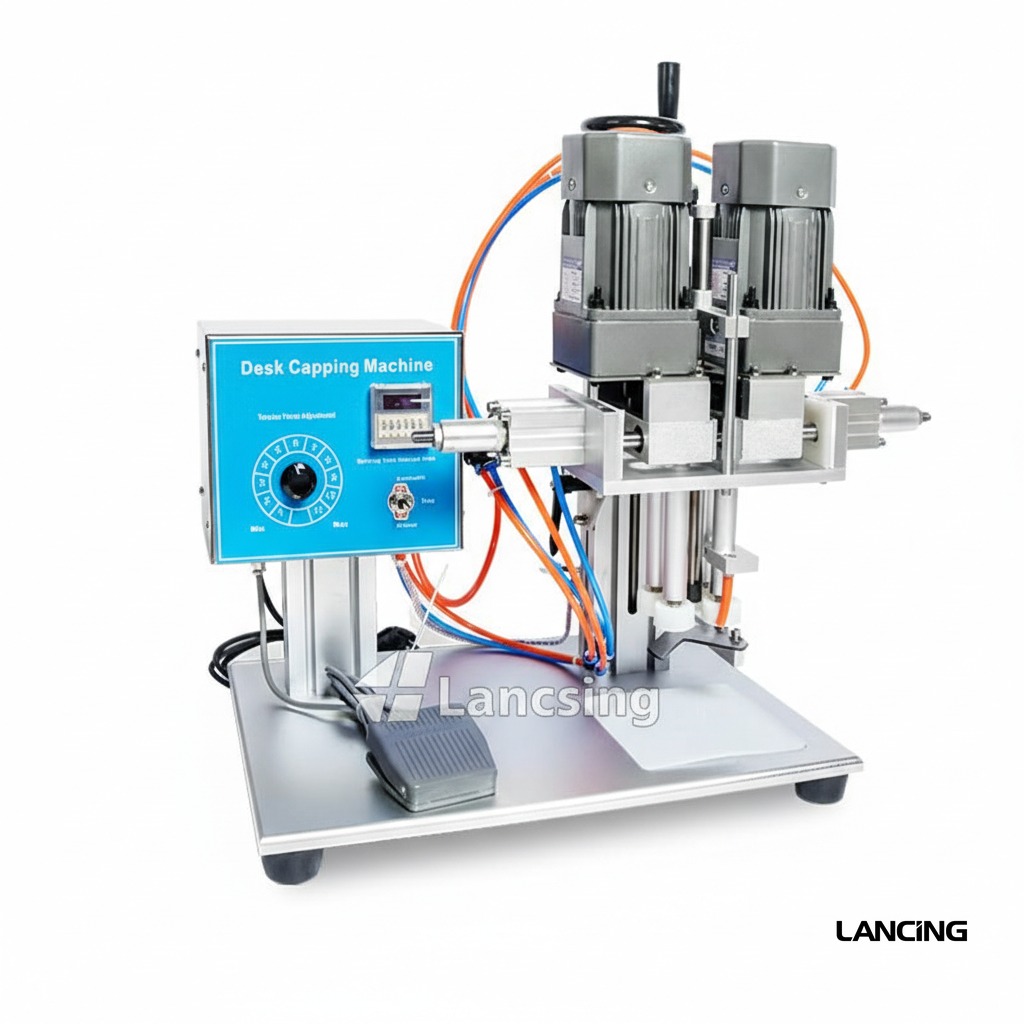
Related equipment
Bench and floor-standing capping machines for batch production, trials and lower-volume lines.
Catalogue photograph; the required configuration is confirmed during quotation.
View related page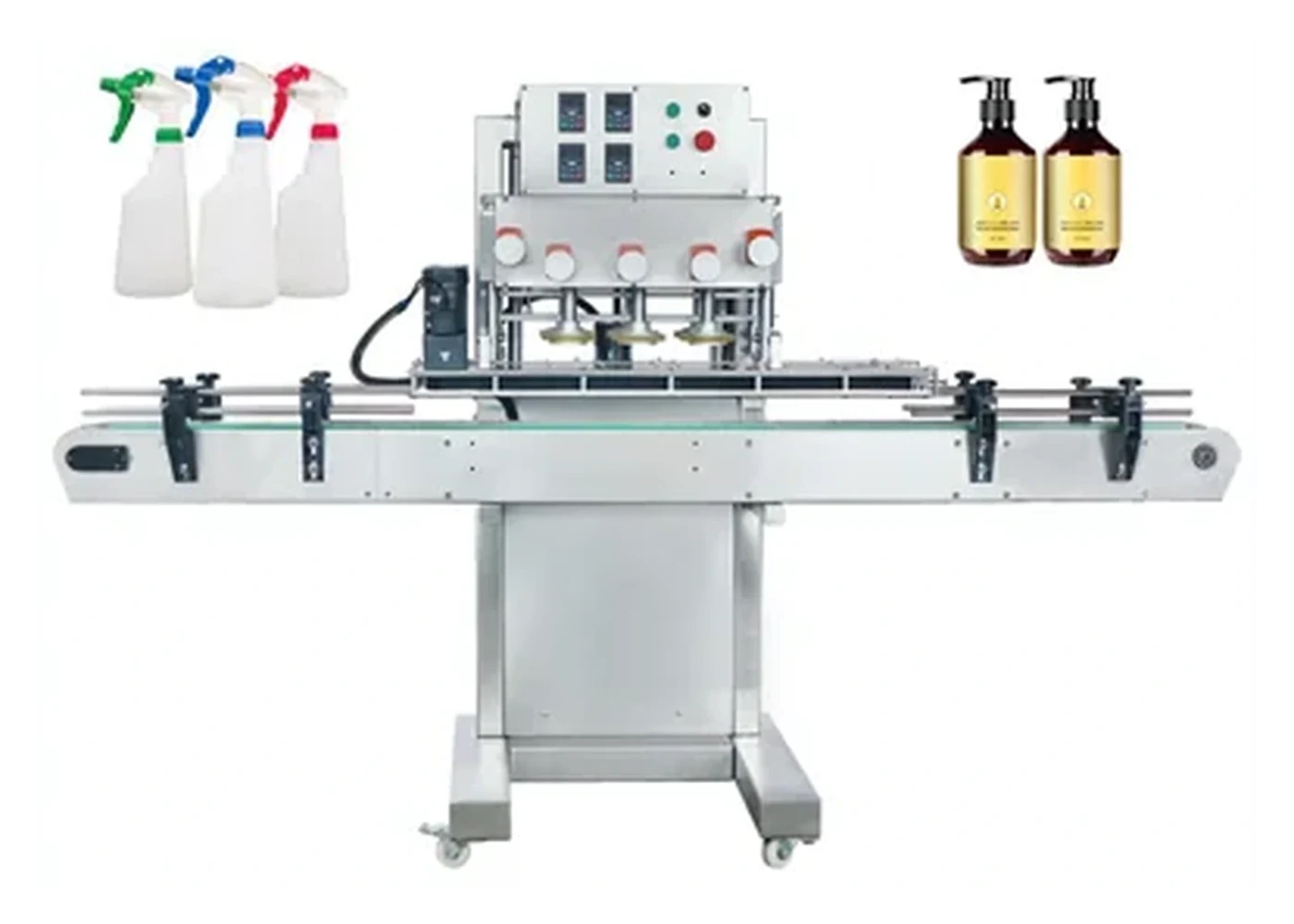
Related equipment
Torque-controlled tightening for threaded caps, flip tops, spray closures and standard screw caps.
Catalogue photograph; the required configuration is confirmed during quotation.
View related page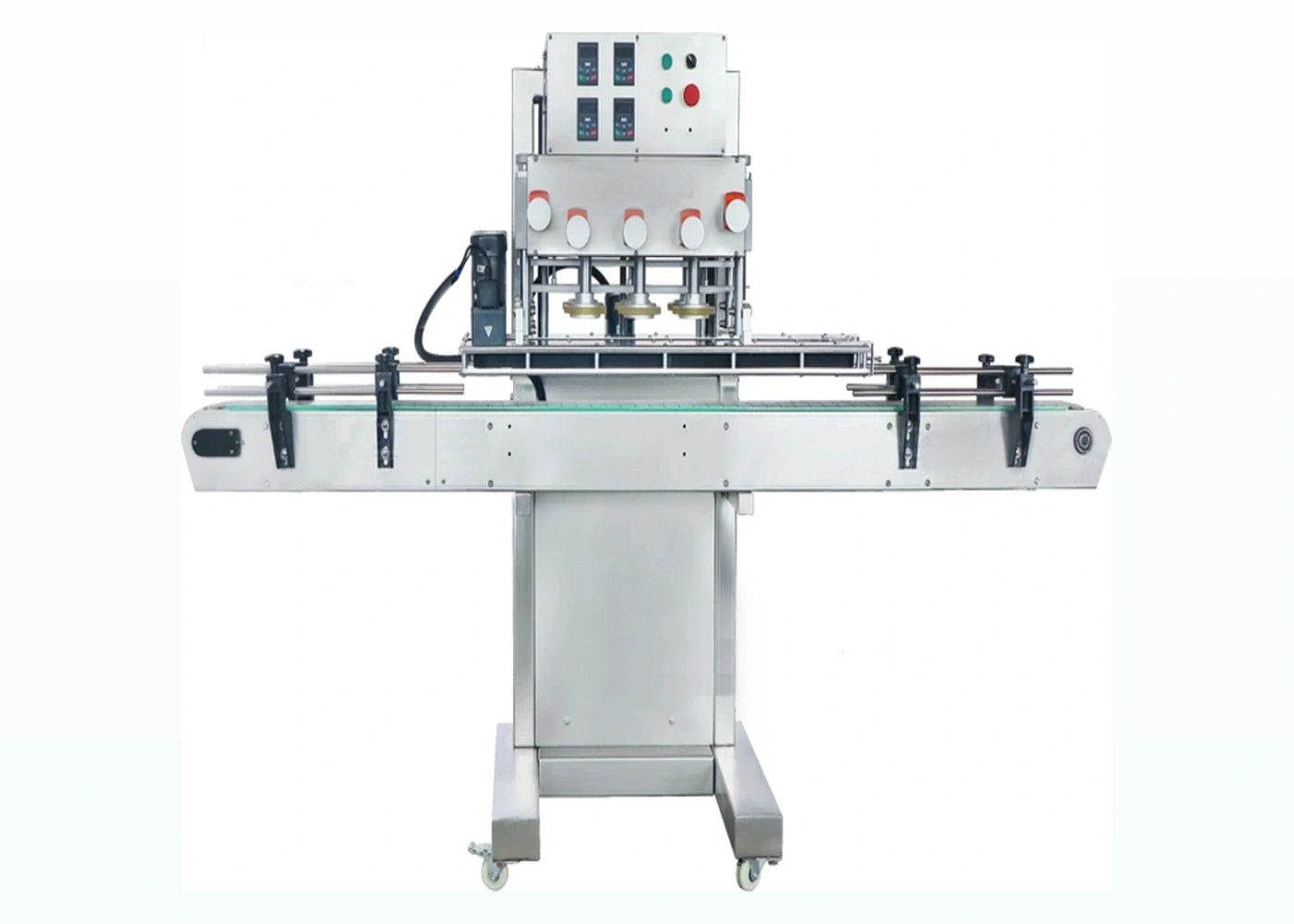
Related equipment
Capping machines specified around repeatable torque, cap profile and bottle stability.
Catalogue photograph; the required configuration is confirmed during quotation.
View related pageProject checklist
Accurate bottle, cap and line information reduces the risk of choosing a capper that looks suitable online but fails in production.
| Area | What to check |
|---|---|
| Operator work | Bottle loading, cap placement and unloading tasks. |
| Torque | Required torque range and cap/bottle tolerance. |
| Batch range | Minimum and maximum bottle and cap sizes. |
| Future volume | Whether automation might be needed later. |
Useful answers
These answers are designed to help production teams prepare a clearer enquiry before sample testing or quotation.
Usually yes, and it is generally more repeatable, but the exact output depends on operator rhythm and bottle handling.
Often, but change parts or adjustments may be needed.
Some semi-automatic machines are standalone; others can be configured with conveyors depending on the design.
Yes, if the bottle can be held securely and the torque range suits the closure.
Send bottle photos, cap samples, output target and line details so the right capper, cap feeder or complete bottle machinery route can be reviewed.
When reviewing a semi-automatic screw capper, include picking up the bottle, placing the closure, presenting it to the machine and removing the finished pack. Ask for a demonstration of this complete sequence with the proposed workbench and pack. Timing only the tightening movement does not describe the work your operator must complete.
Plan a representative batch with the bottle sizes that require different handling. Record accepted packs, interruptions, closure replenishment and format changes separately. The result provides a clearer basis for choosing between a benchtop arrangement and an inline project than a single best cycle.
Compare your required accepted output with the complete operator cycle and staffing plan. Also identify whether feeding and bottle transport, rather than tightening itself, are the steps that need automation.