Flexible bottles
Side pressure and bottle grip need to avoid distortion while torque is applied.
Personal care bottles
Shampoo and personal care bottles are often flexible, shaped and presentation-sensitive, so cap grip and bottle support need careful review.
Specification focus
Flip tops, disc tops, pumps and screw caps each need a different handling approach, especially where the bottle shape is oval or flexible.
Side pressure and bottle grip need to avoid distortion while torque is applied.
Disc tops and flip tops should be tightened without damaging the dispensing feature.
Filled shampoo bottles may need neck control and clean handling before capping.
Related equipment
These pages help compare the main bottle capping machinery routes before requesting a detailed quotation.

Related equipment
Bottle capping machinery for pumps, sprays, trigger heads and closures with dip tubes.
Catalogue photograph; the required configuration is confirmed during quotation.
View related page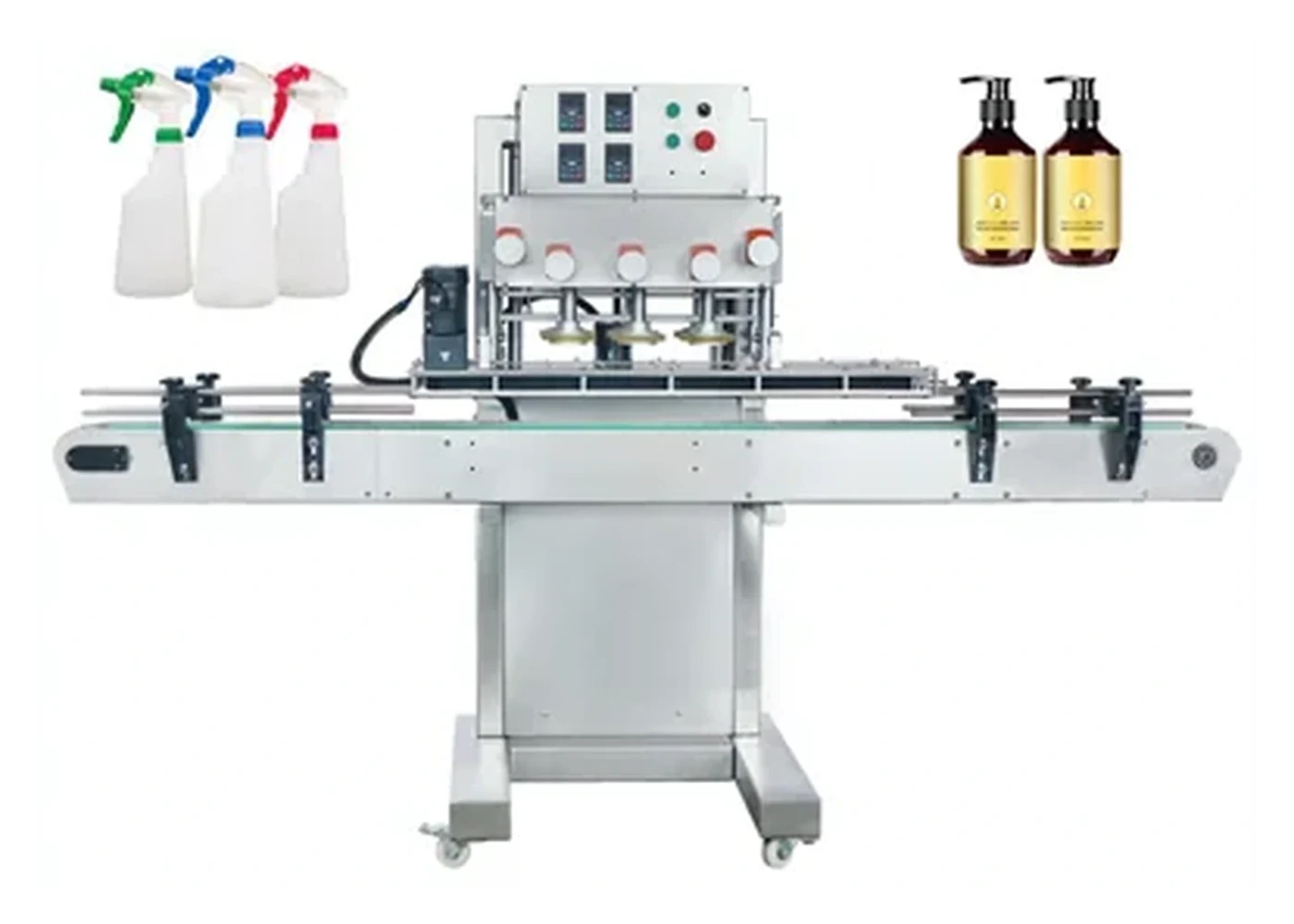
Related equipment
Torque-controlled tightening for threaded caps, flip tops, spray closures and standard screw caps.
Catalogue photograph; the required configuration is confirmed during quotation.
View related pageRelated equipment
Bottle capping machinery for pumps, sprays, trigger heads and closures with dip tubes.
Catalogue photograph; the required configuration is confirmed during quotation.
View related pageProject checklist
Accurate bottle, cap and line information reduces the risk of choosing a capper that looks suitable online but fails in production.
| Area | What to check |
|---|---|
| Bottle shape | Round, oval, flat or shaped bottle with stability details. |
| Closure | Flip top, disc top, screw cap or pump. |
| Fill product | Viscosity and neck cleanliness after filling. |
| Appearance | Cap marks, alignment and final presentation. |
Useful answers
These answers are designed to help production teams prepare a clearer enquiry before sample testing or quotation.
Yes, if the bottle can be controlled and the closure can be presented consistently.
Pumps can be more complex because of height, tube handling and orientation.
They can be if side pressure or torque is not controlled correctly.
Yes. Filling, capping, labelling, coding and conveyors can be reviewed together.
Send bottle photos, cap samples, output target and line details so the right capper, cap feeder or complete bottle machinery route can be reviewed.
A shampoo range may combine flat bottles, oval bottles, flip tops, disc tops and pumps. Present these as individual bottle-and-closure combinations rather than asking whether a machine can run shampoo in general. Include filled samples where possible, because the production pack is the object that must be supported and released.
Define the presentation check from the customer perspective. Show whether the dispensing feature must face a particular direction, whether a decorated cap surface may be contacted and how the bottle should stand after closing. Request evidence against these points alongside the closure checks.
A change from a disc top to a pump introduces different handling questions. Keep the trial records separate and ask the supplier which elements of the first setup carry over and which need fresh assessment.